 |
|||||||||||||
|
|||||||||||||
|
When authenticated this “tapestry” will be considered an important artifact and an Okinawan historic treasure of the Ryukyu Kingdom. It will then be returned to the Okinawan people on behalf of The Women’s Friendship Tour in a future event. This unique and historic event will then write a new chapter to the history of Okinawa and the Ryukyu Kingdom. Simultaneously, this future gathering will be recording a new and historic chapter in Okinawan KarateDo by continuing to introduce the power and dedication of women martial artists globally. |
|||||||||||||
|
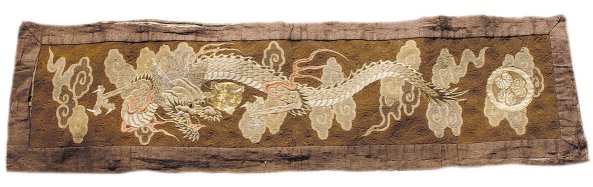
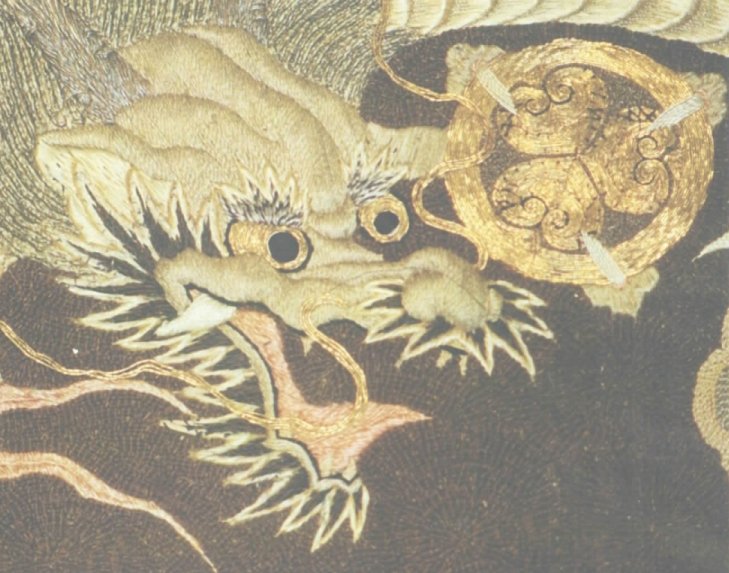
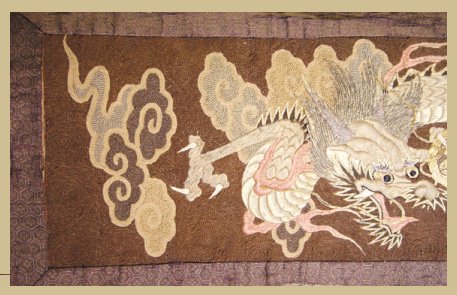
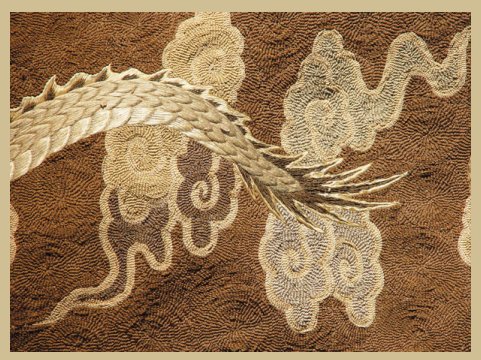
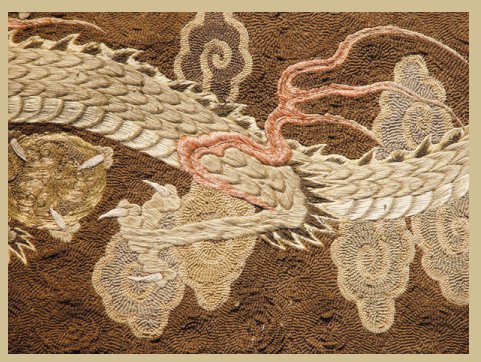
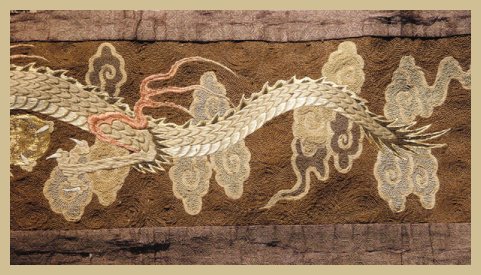
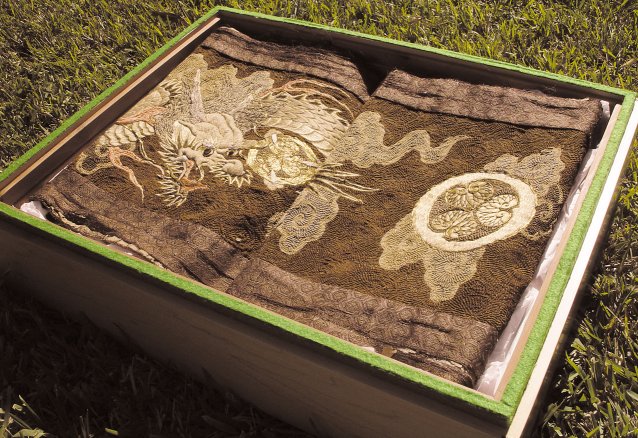
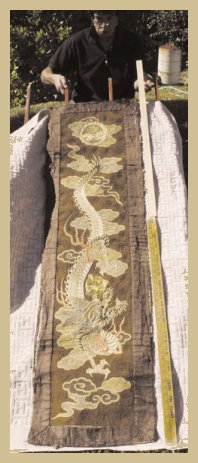
The following is a collage of pictures displaying a
tapestry, which we are told, was taken from the Shuri
Castle
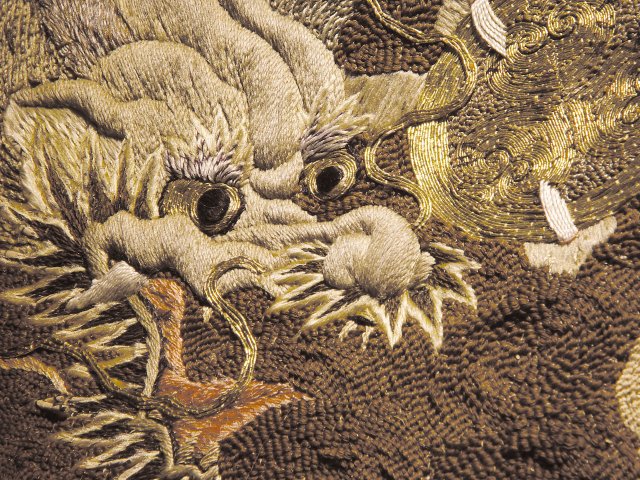
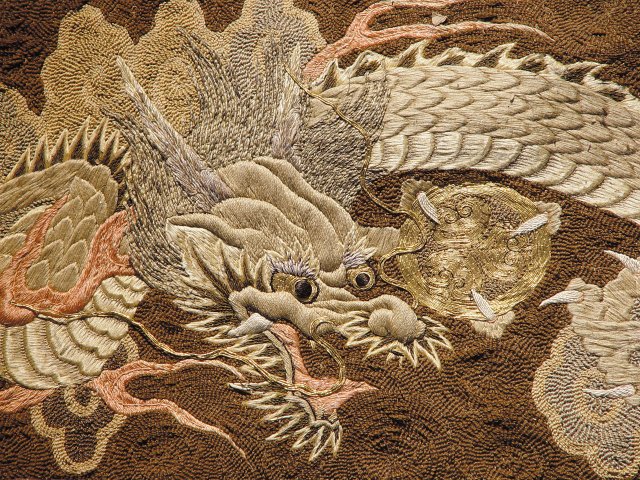
and off of the This beautiful, antique tapestry is completely embroidered and made up of hemp, cotton, silk and gold fibers. Peggy believes it might be considered to be a "tsuzure", a technique which reached Japan from China in the late 15th or early 16th century during the Muromachi (Ashikage) period. Production was at its height in the Tokugawa period; particularly in the early 17th century. Tsuzure was used mainly for robes and gift-wrapping. She believes that this tapestry was probably used for gift wrapping. She has read that there were cultural exchanges between Japan
and the Ryukyu kingdom. During the These processions were known as
Shaon-shi in the case of a change of King and Keiga-shi in the case of a change in Shogun. The term
Edo-nobori or "going
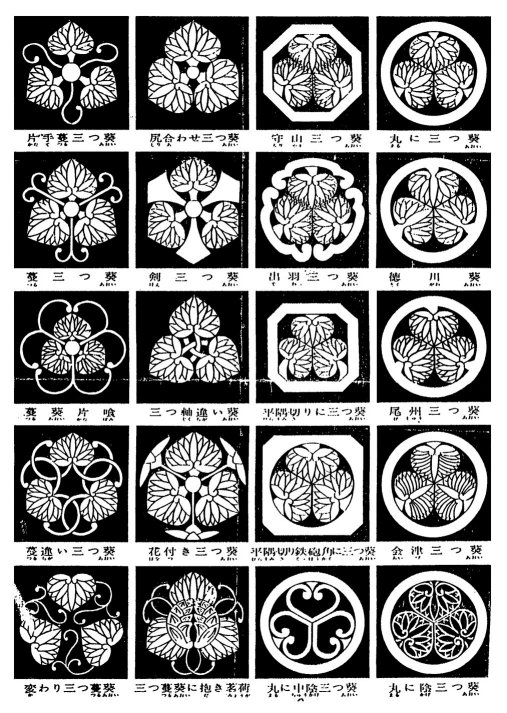
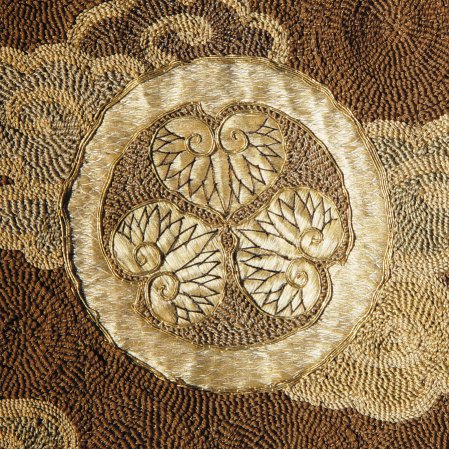
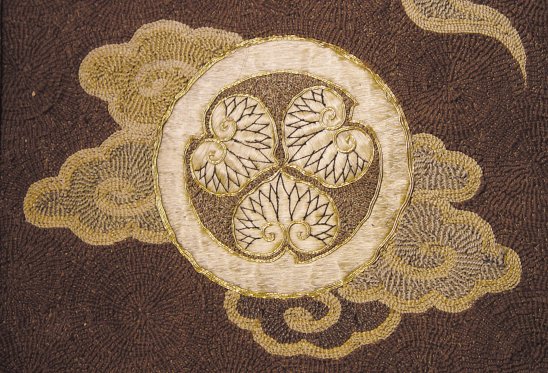
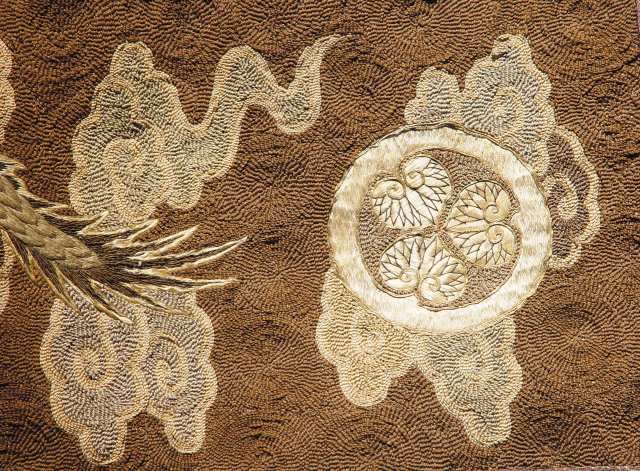
to She believes that most likely this Tsuzure was used as a gift covering during one of these "Edo-nobori" occasions because the presence of two different Tokugawa Mons speaks of it's importance. She knows there is a Ryukyu-American research Association that seeks to return
treasures dating from the Ryukyu era and taken during the battle of (NOTE: The invasion of Okinawa by the Satsuma Clan of southern Japan in 1609 is one of the most significant events regarding the development of Okinawan Martial Arts and the history of the Ryukyu Islands. The Satsuma Clan was a losing faction in one of Japan’s internal power struggles. When the powerful Lord Shimazu of Satsuma, a recalcitrant baron at least in the eyes of Tokugawa
Ieyasu, was defeated in October 1600, Japan was then unified under the Tokugawa Clan. The Tokugawa Shogan then allowed the Satsuma Clan to invade the Ryukyu Islands because the Satsuma army had been subdued but not thoroughly broken. The Tokugawa shogunate wanted the ambitions of the Satsuma samurai temporarily satisfied. The invasion was ideal for this purpose and also allowed the Satsuma Clan to expand its domain and keep its army occupied. In February 1609, the Satsuma Clan launched an expedition against Okinawa with a force of three thousand samurai aboard a fleet of one hundred junks. The Okinawan soldiers were no match for the seasoned warriors of Satsuma. On April 5, 1609, the Okinawan government surrendered and the Satsuma warriors occupied Shuri Castle. They immediately took control of the affairs of the island and sternly ruled the Ryukyu Islands from then on. However, they forced the Okinawans to maintain the political status quo with China so as not to interfere with trade. Okinawa was never to be independent again and was completely subjugated by the Satsuma Clan.) Tokugawa Mons: Left to right, top to bottom. Forth column, third row, mons at the tip of the tail on the tapestry Third column, fifth row, gold mons in the dragons claw by face.
|
|||||||||||||
|
Copyright ©April 2002 Marguerite Hess www.womenskaratetour.org |
|||||||||||||
|
Women’s Friendship Tour Marguerite Hess, 1195 Ocean
View Circle, |
|||||||||||||
|
e-mail: peggyhess@womenskaratetour.org OR dphess@bellsouth.net Click here to see an up to date list of our sponsors |
|||||||||||||